PRAIRIE
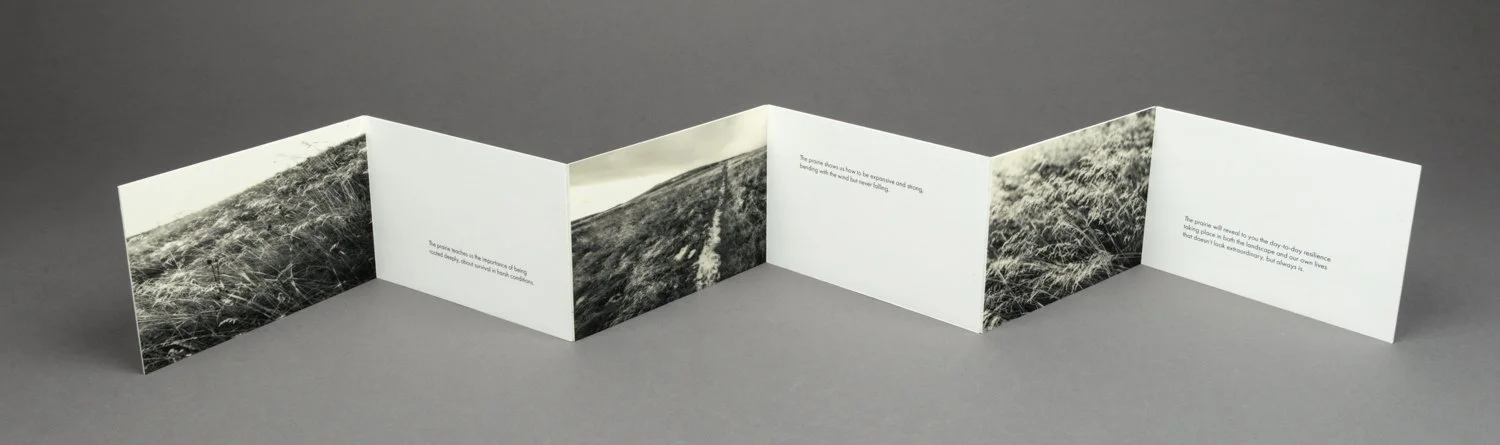
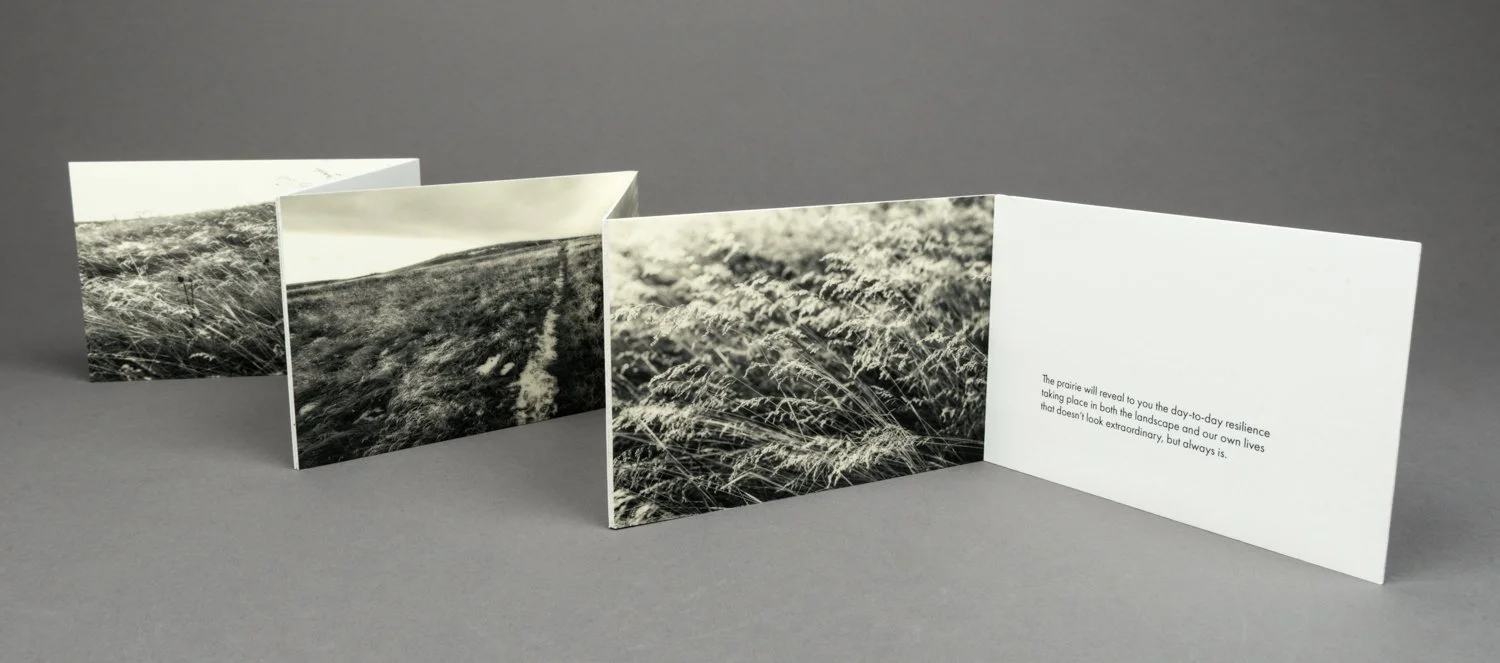
These books look at the prairie landscape as a metaphor for survival in the landscape and in our own lives, encouraging us to look closer and notice what is commonly overlooked, what we often mistake for absence, to find wisdom and endurance all around us.
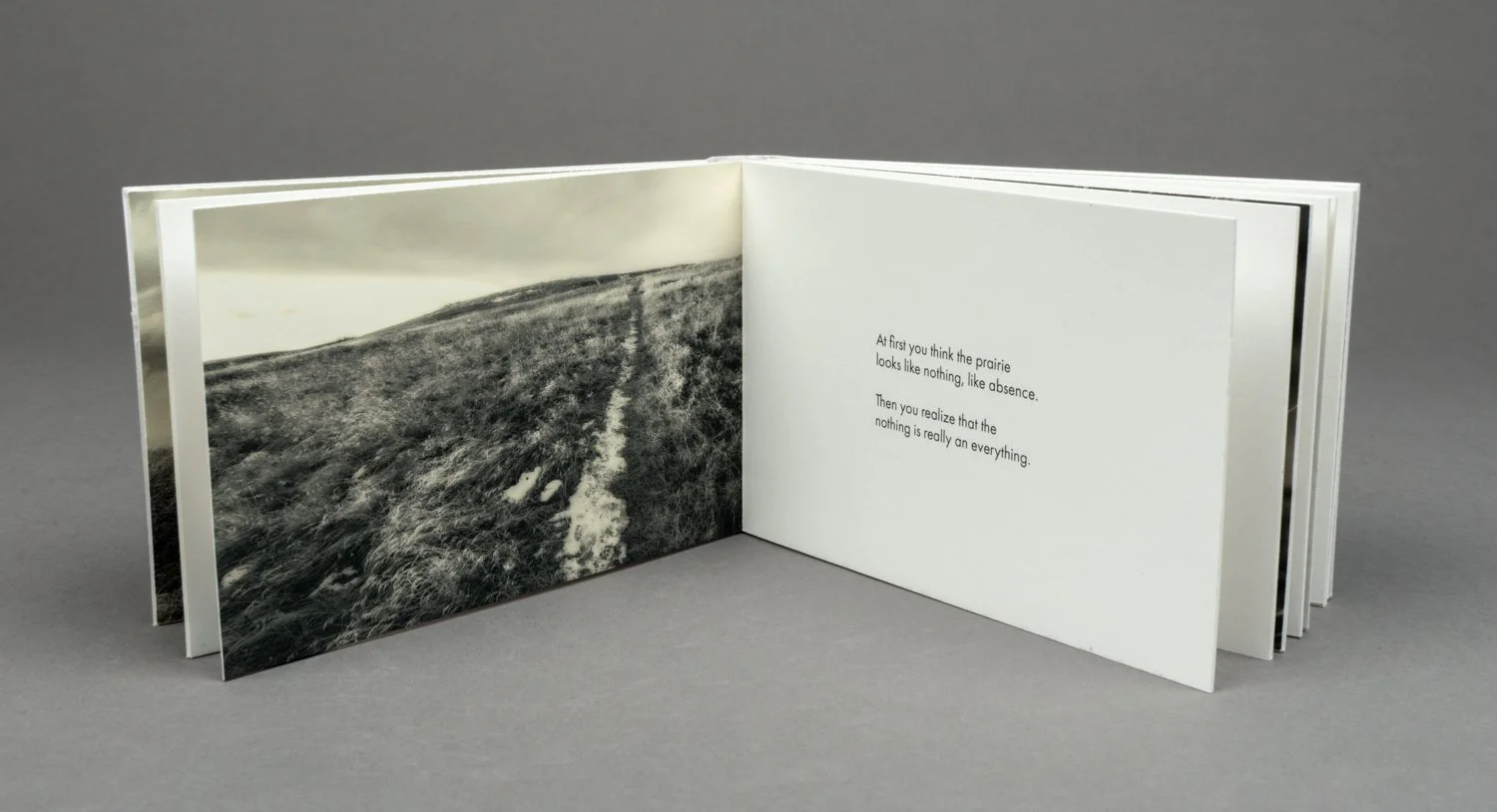
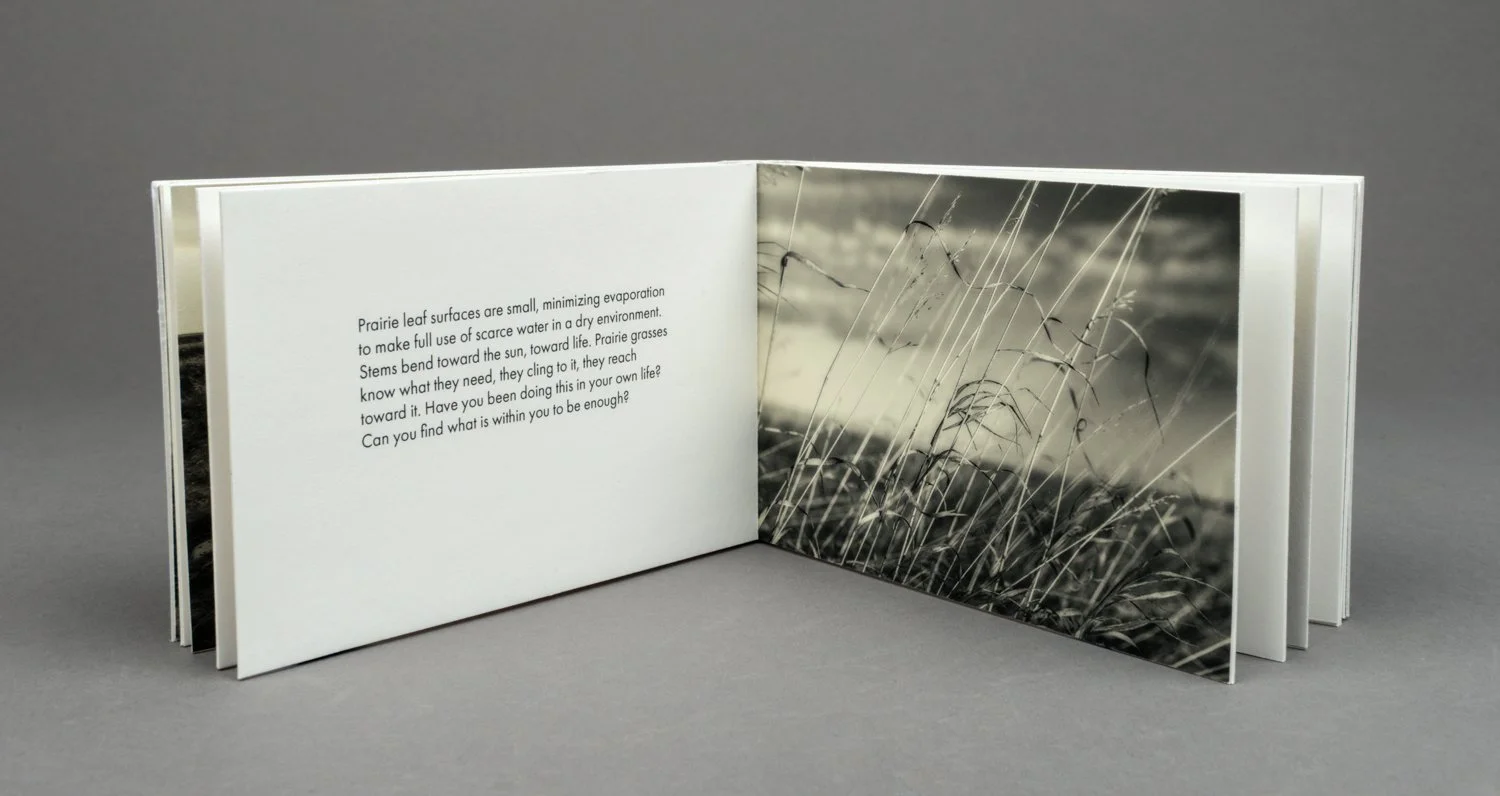
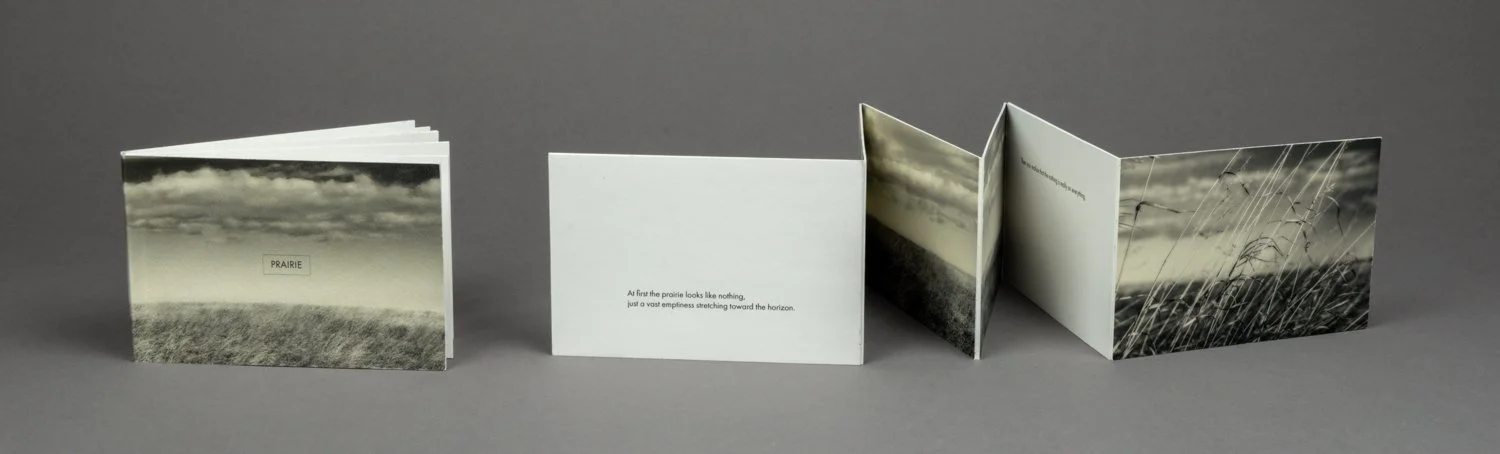
Archival inkjet prints: 6 x 4”
Two versions:
(1) drum leaf binding (first four images below)
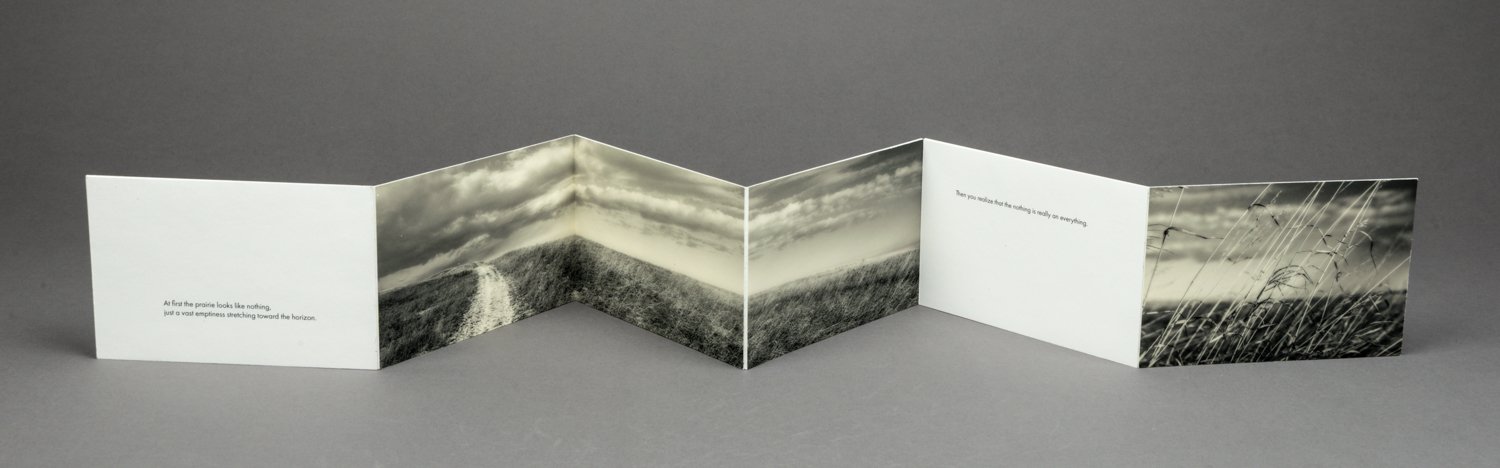
(2) two books, one with drum leaf binding and other with accordion binding, collected in a slipcase (remaining images below, beginning with the black slipcase that contains the books)
The complete text of the book is underneath the image gallery, below.
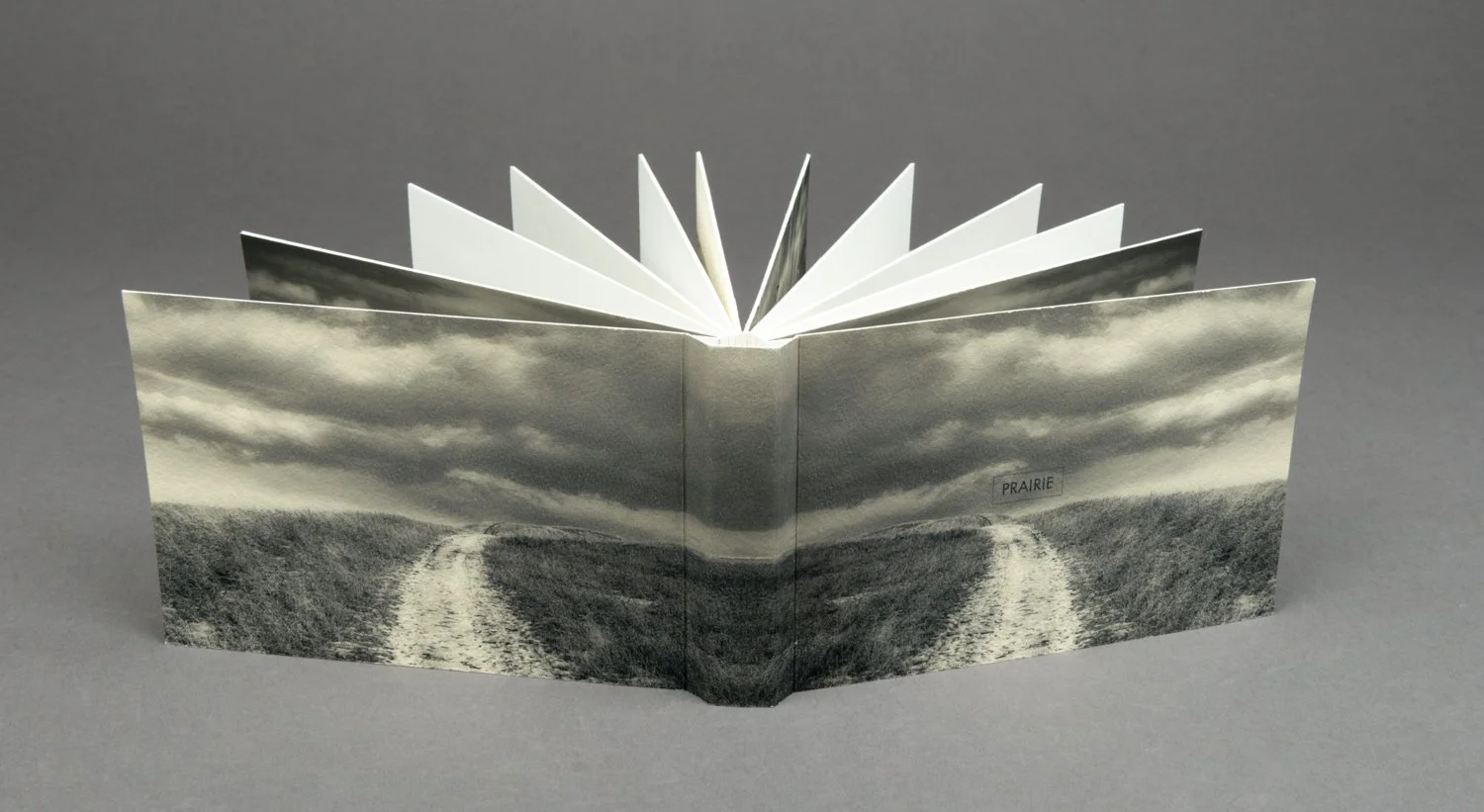
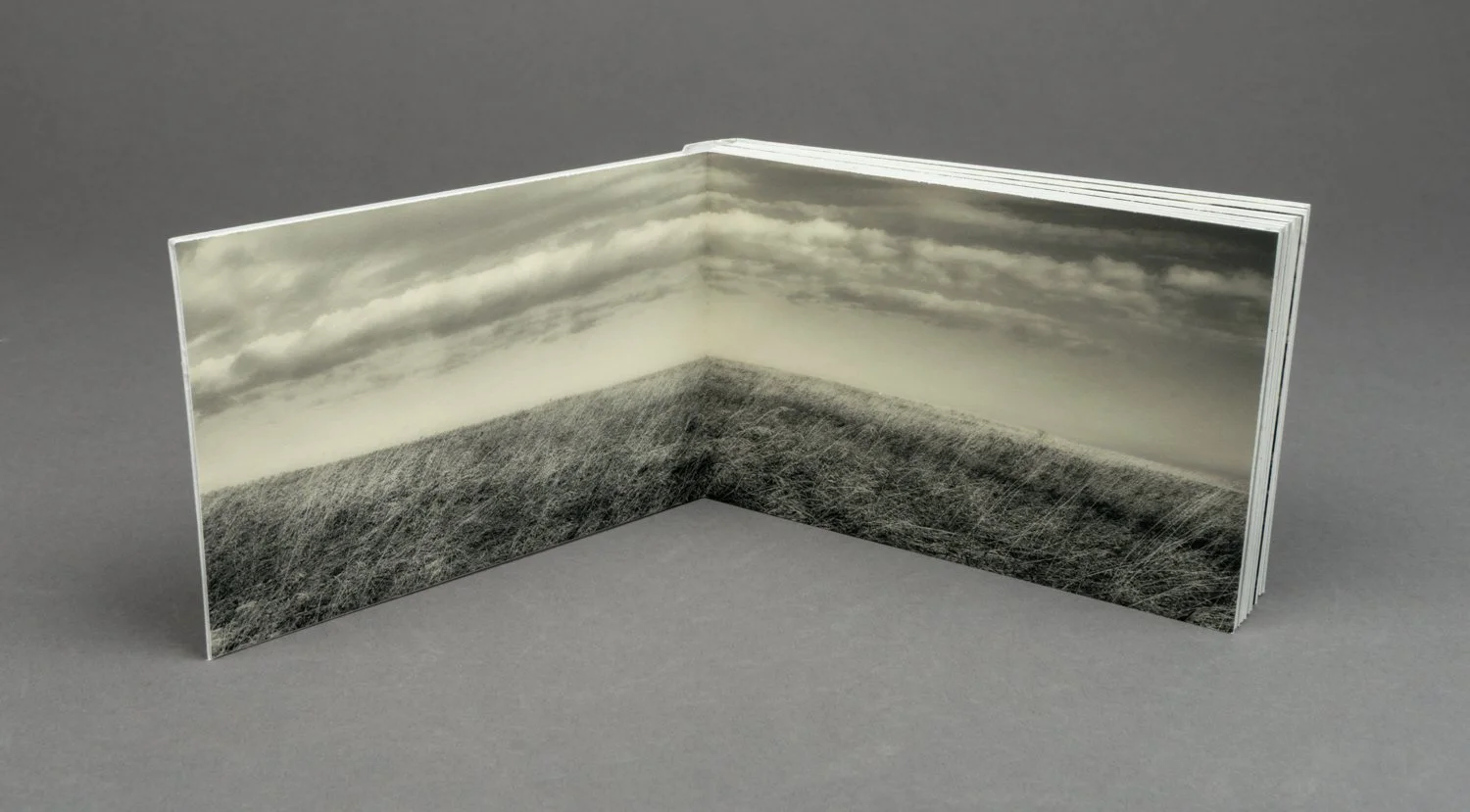
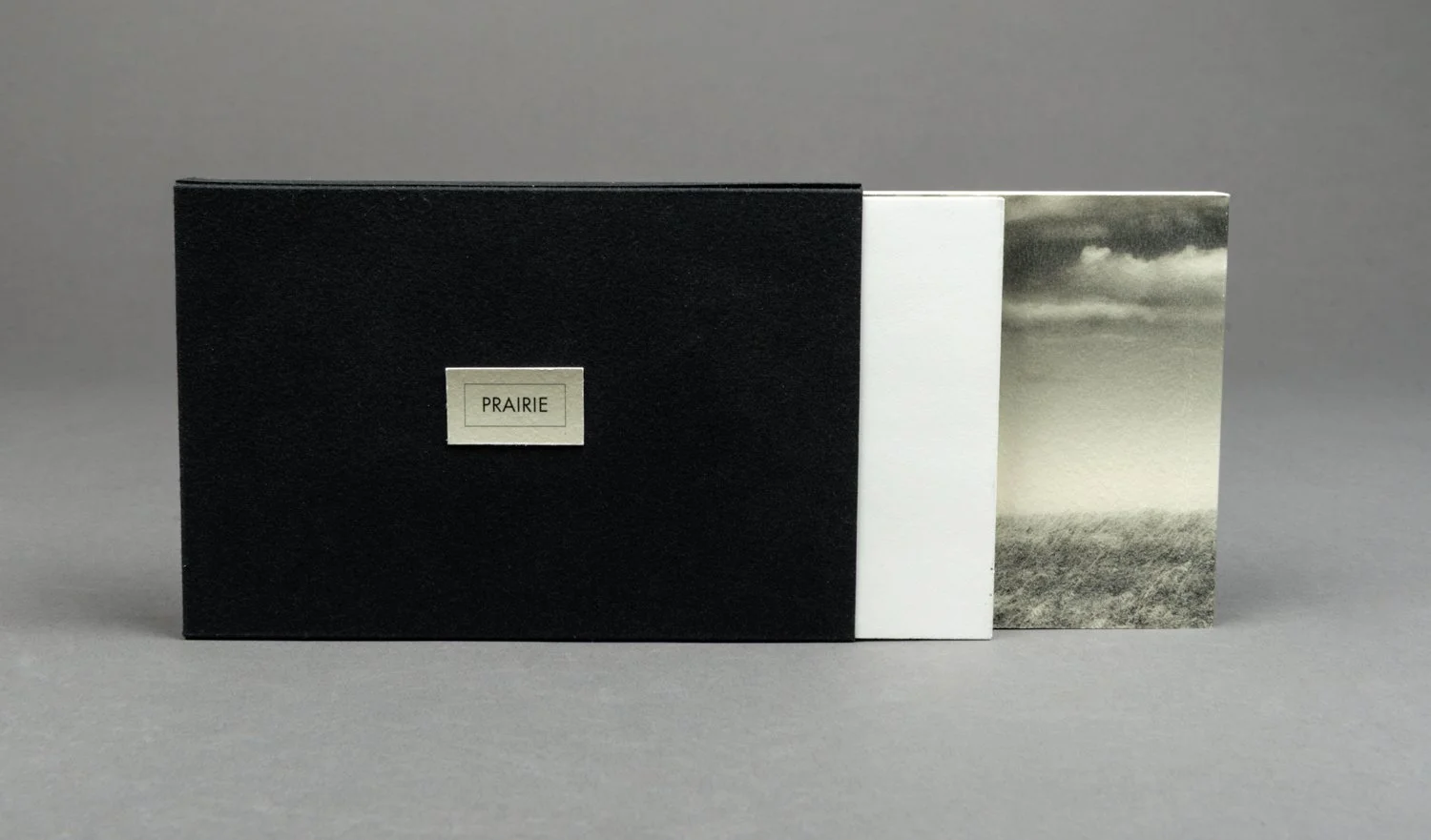
PRAIRIE
At first you think the prairie looks like nothing, like absence. Then you realize that the nothing is really an everything.
An everything that can teach you how to survive. Because the prairie survives quietly, persistently, unostentatiously. Close to the ground, unnoticed. And you can too, because your life which feels small is not small. Your self which feels fragile is not fragile. You are like the prairie grasses, hugging the ground: strong, rooted, safe, even if you do not know it yet.
The prairie is about rootedness. Grassland root systems go deep: up to four meters down into the soil, extending horizontally underground to prevent erosion. And yet you cannot see this, as this strength is hidden beneath the seemingly unremarkable surface. And maybe yours is too: you miss all that you are holding together in your hands, in your body, in your heart, in your life. What holds you together lies inside, unseen.
Prairie leaf surfaces are small, minimizing evaporation to make full use of scarce water in a dry environment. Stems bend toward the sun, toward life. Prairie grasses know what they need, they cling to it, they reach toward it. Have you been doing this in your own life? Can you find what is within you to be enough?
The prairie is resilient. It can survive fire, endure, and regrow. You look at your life, at the difficulties that have burned you down to your essence, burned away the structures and relationships and identities that you thought would always be with you. You wonder if there is a you that can come back from this. But maybe the prairie knows better. Its vastness returns year after year, emerges even from ashes. What you lost was not the core of you. What remains can regrow.
You look out at the prairie, open and expansive. You feel the wind on your face, the sense of possibility that comes from having a life with unobstructed horizons. You sway with the wind, but you do not fall. Maybe the forces in your life you think you need to fight are really just like the wind: things that are happening around you, but do not change you, as they continue on their own path.
In winter, the prairie disappears from sight. It’s hidden by snow like it’s not there at all. Yet it never goes away. Its presence is a subtlety, the opposite of a towering mountain, and because of that maybe it’s exactly the symbol you need right now. You need the small, yet persistent reassurances, the everyday survival and resilience that doesn’t look extraordinary, but always still is.
You are not from the prairies, so you need to learn these things: you do not know them in your bones. You need to watch the seasons change to understand what the prairies has to teach. Because you come from somewhere else, from so many other places, really, without any roots, shallow or deep.
Maybe all you need is to dig deep, hold fast, be like the prairie in the wind, bending but enduring. Maybe you think that nothing of who you used to be remains. But that nothingness is an everything too. It is an everything survives like the prairie and, like the prairie, is a wonder.